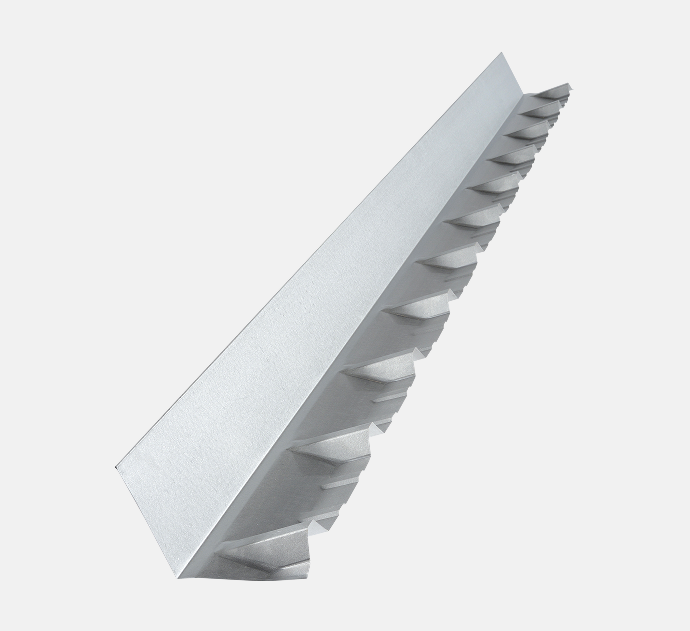
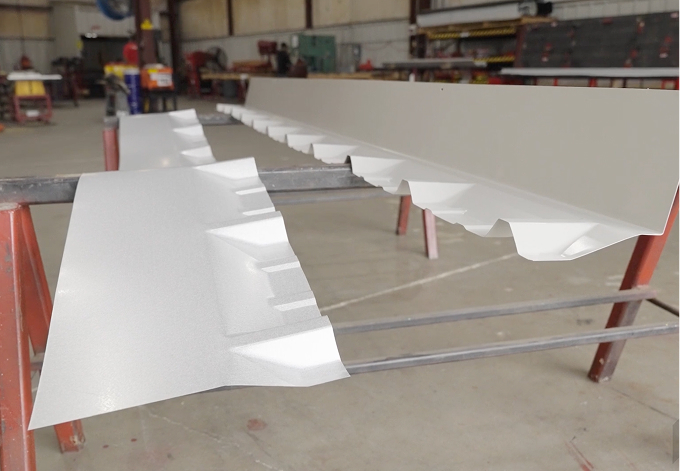
Die Formed Flashing

Metal Building Flashing Provides a Safe Seal for Your Structures

Safeguard your metal buildings against mold, insulation damage and other harmful effects of moisture infiltration with die formed flashing from Metallic Products. Designed for use around windows, vents, joints and other areas prone to leaks, flashing’s angles direct moisture away from vulnerable areas of your steel building, toward gutters, downspouts and the like.

Metallic Products’ metal building flashing is available for both “R” and “M/U” panel profiles, and comes in a range of color and finish options to suit your structure’s look. With a number of custom applications available — ventilator skirt flashing, roof-to-wall flashing, wall-to-roof transition flashing and high-side eave flashing, too — it’s a simple, inexpensive solution for your metal buildings.

Die Formed Flashing: Full Details & Specs

Standard Features

  • 10′ coverage
  • “R” Panel and “M” Panel Profiles
  • Galvalume, Polar White or standard colors options available
  • View MBCI Color Chart for available colors

Applications

  • Wall-to-Roof Transition Flashing
  • Ventilator Skirt Flashing
  • Roof-to-Wall Flashing
  • High-Side Eave Flashing

Steel Building Flashing FAQs

Get quick answers to common questions about steel building flashing and how it helps protect roof penetrations, windows, doors and other vulnerable areas from water intrusion.

A:

Roof penetrations create potential entry points for water, making proper flashing essential. Flashing helps direct water away from vents, curbs and other openings, protecting the roof system and the building below from moisture intrusion.

A:

Installation varies depending on the type of flashing, roof panel profile and penetration involved. In general, metal roof flashing should be properly fitted, fastened and sealed to direct water away from the opening while maintaining the integrity of the roof system. Always follow the flashing and roofing manufacturers’ installation instructions for your specific application.

A:

The right flashing depends on the roof profile, accessory and application. Metallic Products offers die formed flashing for “R” and “M/U” panel profiles, with options such as ventilator skirt flashing for vents and other roof penetrations. Roof-to-wall, wall-to-roof transition and high-side eave flashing are also available for areas where different building surfaces meet. Custom applications can help create a precise fit that directs moisture away from vulnerable areas and toward the building’s drainage system.

A:

Properly designed and installed flashing is one of your roof system’s key defenses against leaks. It helps channel water away from joints, penetrations and other vulnerable areas where moisture could otherwise enter the building.

A:

Base flashing is installed where the roof meets a vertical surface to help direct water away from the joint. Counter flashing overlaps the base flashing to provide an additional layer of protection, helping keep water from getting behind the flashing system.

A:

Flashing that is incorrectly sized, sealed or installed can leave gaps where water can enter the roof system. Over time, that moisture can contribute to leaks, corrosion, damaged insulation and other issues that can impact your metal building’s long-term performance.

Questions About
Our Metal Building Flashing?

Contact Metallic Products