
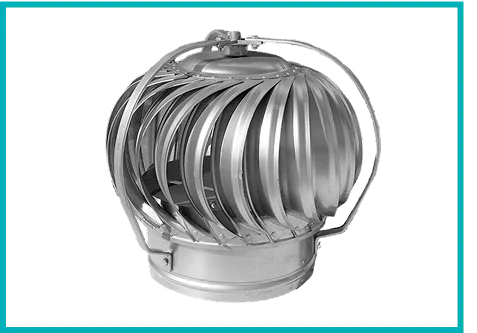
The whirlybird vent ventilates metal buildings by harnessing wind power instead of relying on an electrical source. When warm indoor air rises toward the roof and wind moves across the vent, blades turn inside the vent. This movement creates an upward pulling effect that draws warm, stale air out of the building.
When sized and installed correctly, whirlybird vents help promote steady air exchange by exhausting trapped indoor air and supporting fresh air intake through the building’s ventilation system. They’re best suited for applications where consistent natural ventilation and heat relief are needed, but not necessarily high-volume, precision airflow. This can include the following.
- Agricultural Buildings
- Attic Spaces
- Light Commercial or Utility-Type Buildings
- Small Workshops
- Warehouses


