Turbine Vents

The Turbine
Vent Offers
Stress-Free
Airflow Support,
No Electricity Needed

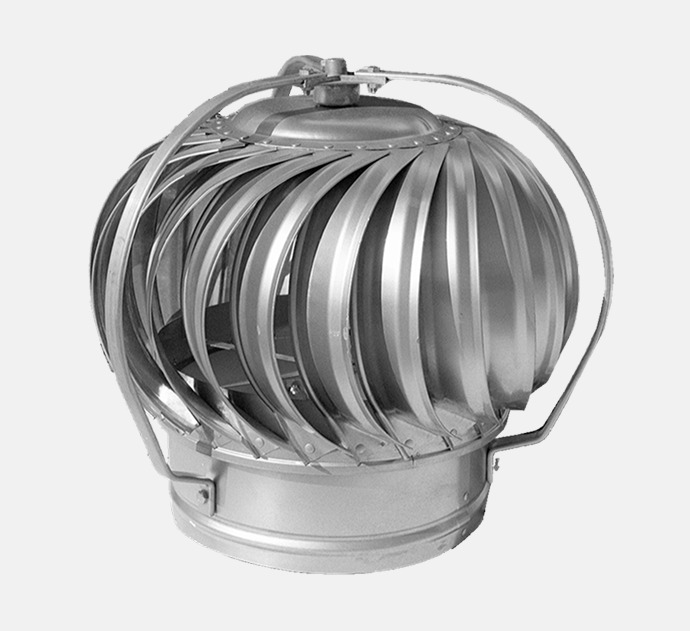
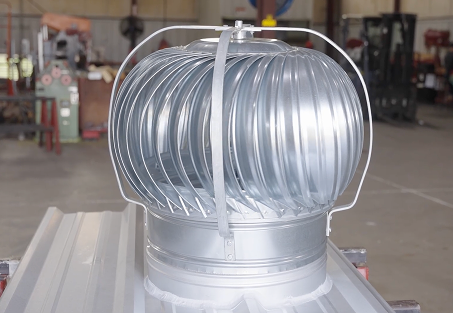
Metallic Products’ turbine vents are proof that there’s no reason to settle for stagnant air inside a metal building. A natural means of improving airflow, the turbine vent draws hot, stagnant air up and out of a space with help from spinning blades powered by wind. It’s an ideal option for attics and smaller-scale industrial or agricultural buildings with less extensive ventilation needs.

With few moving parts to wear out or break, and the ability to operate without electricity, the turbine vent is an efficient, cost-effective — and virtually maintenance-free — approach to ventilating a steel building. It’s healthy airflow without the headaches.

Customize your turbine vents to suit your unique needs and preferences. We offer throat sizes ranging from 12″ to 24″, with additional sizes available upon request. A variety of base types allows you to match your turbine vent with your roof slope. Meanwhile, with a range of available colors, you can rest assured the end product will blend easily with your look.

Turbine Vent: Full Details & Specs

Standard Sizes
The turbine vent comes standard in 12″, 14″, 16″, 20″ and 24″ throat sizes. Other sizes available upon request.


Construction
The turbine ventilator is constructed of 24-gauge galvanized steel with bottom thrust-type oil impregnated ball bearings. Internally braced vents are available in 12”, 14”, 16” and 18”; externally braced vents are available in 20” and 24”. All vents are braced with aluminum steel bracing.


Dampers
Dampers are available upon request and feature a pull-chain operator.


Base Design
Turbine vent base is specifically designed for final installation, with specified roof slope — either ridge or single slope — and either flat or mounted into the specified roof panel. Base and ventilating unit come preassembled ready for installation. Single-slope bases mount directly into the roof panel, placed in such a way as to prevent damming.

Note: When ordering, please specify roof slope, base type, damper pull chain and paint color.

Turbine Ventilator FAQs

Get quick answers to common questions about turbine ventilators and how they support natural, efficient metal building ventilation.

A:

A turbine ventilator uses wind power to spin its blades, creating a vacuum that pulls hot, stale air up and out of your metal building. As air is removed, fresh air is drawn in through intake points, supporting continuous airflow.

A:

Yes. Turbine roof vents rely entirely on wind to power their movement — and require zero power consumption. This makes them an energy-efficient, low-maintenance option for metal building ventilation.

A:

A turbine vent’s airflow depends on factors such as wind speed, vent size and building conditions. In general, turbine ventilators can move a significant amount of air in moderate to high winds, making them an effective solution for many smaller-scale ventilation needs.

A:

Turbine ventilators perform best in areas with consistent airflow. In low-wind conditions, they may still provide some ventilation due to natural convection, but performance will likely be reduced compared to windier environments.

A:

Efficiency depends on your goals. Turbine ventilators are highly energy-efficient, since they require no electricity and minimal maintenance. Powered exhaust fans, on the other hand, provide more consistent, controllable airflow regardless of weather conditions, making them better suited for larger or more demanding applications. Your accessories provider can help determine the right ventilation accessories for your particular building and needs.

A:

Properly designed and engineered turbine vents are built to minimize water intrusion. Features such as internal baffles and weather-resistant construction help protect your building from rain, though correct installation is key to ensuring optimal performance.

Questions About
Our Turbine Vents?

Contact Metallic Products